
Sep. 17, 2026
SEC Exam Priorities for Q4 2026: Reg S-P, Alt Investments & AI

Sep. 03, 2026
Should financial advisors resign while under investigation? (What Actually Happens)

Aug. 20, 2026
The SEC’s New Digital Asset Framework: What RIAs Should Be Thinking About

Aug. 06, 2026
Succession Planning: Why A “Wait-and-See” Strategy Could Cost You Millions In Valuation

Jul. 23, 2026
The AI Washing Trap: SEC Marketing Rule Guide for RIAs
In the wealth management industry, receiving a customer-initiated complaint, arbitration claim, or civil lawsuit isn't just stressful—it’s a systemic risk to your livelihood. Even the most diligent financial advisors can find their clean records blindsided by an unexpected regulatory disclosure.
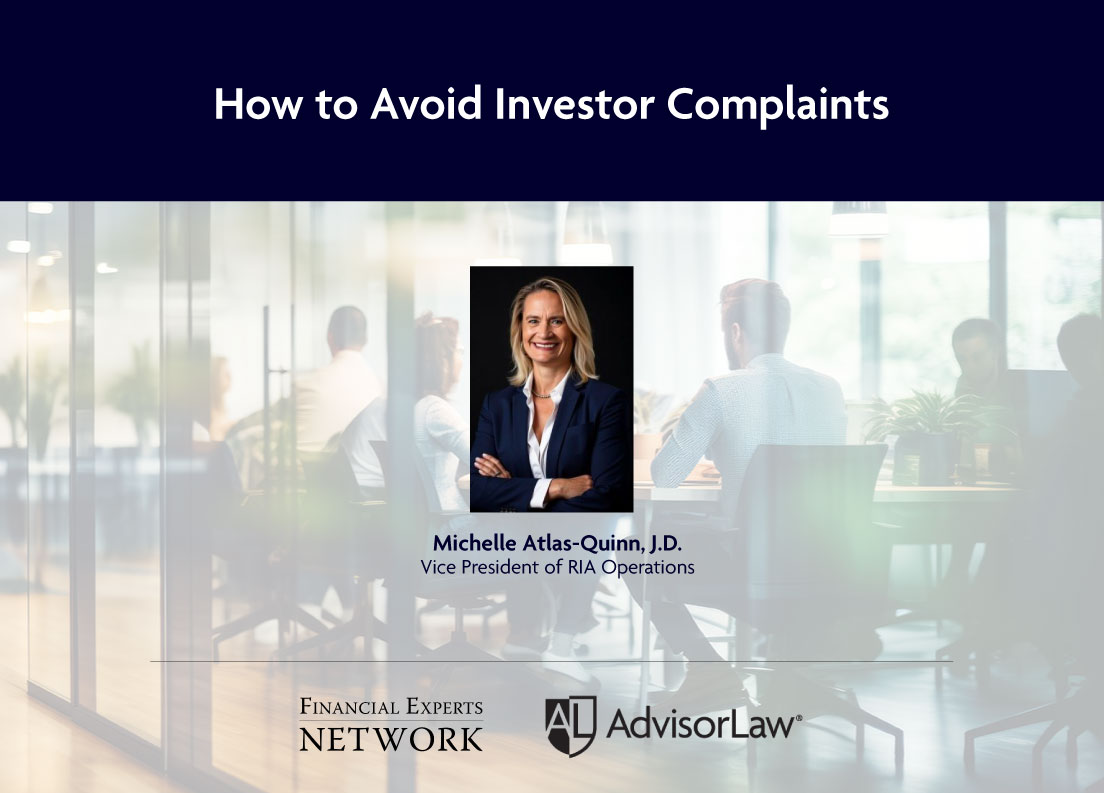
To help independent advisors navigate and neutralize these threats, Michelle Atlas-Quinn, J.D., compliance attorney at AdvisorLaw, hosted an essential continuing education (CE) course. This session breaks down the primary triggers behind investor grievances and delivers concrete, proactive defense strategies to insulate your practice.
Whether you are looking to earn CE credits or simply shore up your compliance framework, you can watch the full on-demand replay below.
Watch the On-Demand Webinar
Quick Risk Factors & Summary
- The Reality of Risk: Customer complaints are often triggered by market volatility rather than actual advisor wrongdoing, making proactive documentation vital.
- Root Causes: Misaligned risk tolerances, poor communication during market downturns, and a lack of clear alternative investment disclosures.
- Core Mitigation: Implementing rigorous, contemporaneous note-taking and structured client onboarding protocols to eliminate "he-said, she-said" disputes.
Key Insights: Understanding and Preventing Investor Complaints
During the presentation, Michelle Atlas-Quinn explores the anatomy of a customer dispute and outlines how modern wealth managers can successfully lower their risk profiles.
The Common Triggers of Customer-Initiated Disputes
Most investor complaints do not stem from intentional misconduct; instead, they are born out of a gap between client expectations and market realities. Michelle highlights why keeping a close eye on suitability definitions, portfolio concentrations, and alternative product disclosures is critical, especially when navigating shifting economic landscapes.
Proactive Strategies to Mitigate Compliance Risk
To protect your BrokerCheck and CRD records from meritless claims, your defense must begin long before a client files a statement of claim. The webinar dives deep into operational best practices, including:
- Contemporaneous Documentation: Tracking every call, email, and in-person meeting with detailed, time-stamped notes.
- Continuous Risk Profiling: Re-evaluating and updating client risk tolerances annually, rather than relying solely on onboarding documents.
- Setting Realistic Expectations: Ensuring clients fully grasp the liquidity constraints, fees, and realistic horizons of complex investment vehicles.
Already Facing a Dispute? We Have Your Back.
While avoidance is always the first line of defense, a groundless complaint can still break through. If a client dispute has already hit your record, you don't have to let a business-decision settlement or a frustrated customer dictate the future of your practice.
Beyond risk mitigation education, AdvisorLaw specializes in enforcement defense and aggressive FINRA expungements to clear unfair disclosures and fully restore your professional integrity.
Want to protect your practice or evaluate a current disclosure? Connect with AdvisorLaw today to consult with our defense team and streamline your practice.
Engage with our experts today!