


The Hidden Multiplier: How Clearing Your Record Today Maximizes Your RIA’s Exit Value
FINRA Panel Clears Baseless Advisory Fee Dispute For Florida Financial Advisor

RIA Partnership Disputes: The Critical Risk of CRD/IARD Super Account Administrator (SAA) Control

FINRA Panel Grants Triple Expungement For New York Financial Advisor
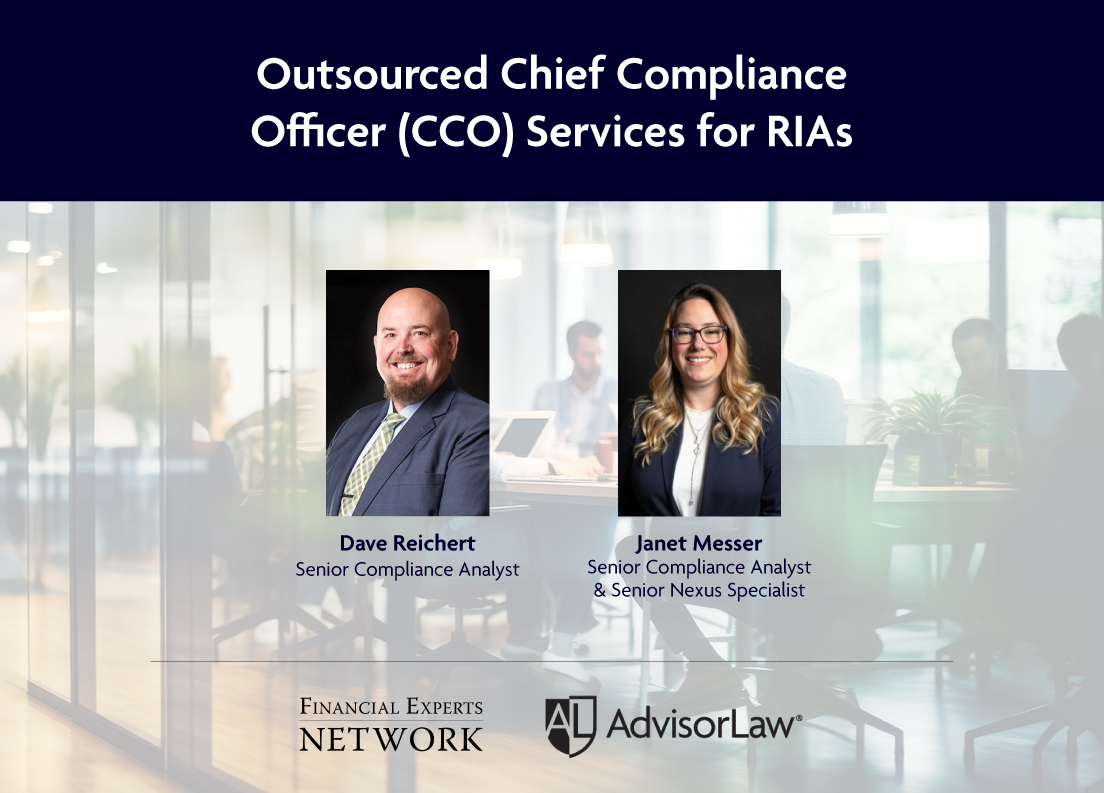
CE Credit Course: Outsourced CCO (OCCO) Services for RIAs
The world of financial advising is abuzz with the potential of Artificial Intelligence (AI) and Generative AI (GenAI)—from crafting hyper-personalized investment strategies to streamlining client communication. While AI promises a revolution, it is crucial to recognize its limitations, especially as they apply to the shifting landscape of RIA compliance.
The SEC's initial proposal on “Predictive Data Analytics” (PDA), though now potentially reframed, highlighted the central conflict: AI-driven systems inherently optimize for certain outcomes, creating the potential for conflicts of interest. For example, an AI advisor could unintentionally nudge clients toward investments that benefit the firm’s bottom line, even if it's not in the client’s absolute best interest.
This regulatory tension is echoed by voices like Senators Cruz and Hagerty, whose past efforts (like the "Protecting Innovation in Investment Act") argued against rules that could stifle innovation. This pushback, combined with the SEC's persistent scrutiny and FINRA's 2026 guidance on GenAI governance, makes one thing clear: compliance isn’t a technical problem solved by software. It requires the nuanced judgment and expertise of experienced professionals—human securities attorneys and certified securities compliance professionals (CSCPs).
Why AI Can’t Guarantee Compliance (The 2026 Risks)
The allure of AI for automating tasks is undeniable, but for Registered Investment Advisors (RIAs), it falls short of guaranteeing compliance. Relying solely on AI can expose your firm to significant regulatory risk.
Here’s why the human element remains non-negotiable:
1. The Human Touch in a Gray World of Fiduciary Duty
Regulations, though detailed, often leave room for nuanced interpretations—especially concerning an RIA’s fiduciary duty. Experienced human attorneys draw on past cases, enforcement actions, and regulatory history to navigate these gray areas. Their judgment keeps your firm on the right side of the law. AI, conversely, often struggles with the context and intent behind regulations, making it difficult to justify complex compliance decisions to an examiner.
2. The Black-Box Conundrum (The SEC’s Focus on Explainability)
Many AI systems, particularly complex ones, function like black boxes. They deliver outputs without a clear explanation of how they arrived at those conclusions. This lack of transparency is highly problematic, as the SEC’s 2026 Examination Priorities directly assess AI Supervision and Explainability. Regulators will not accept an AI decision without a clear, auditable logic trail. Human experts ensure this clear explanation and justification is provided, which is essential for building trust with examiners.
3. The Bias and Conflict Trap (Beyond PDA)
AI algorithms are only as good as the data with which they are trained. Data sets can harbor hidden biases that seep into the AI’s decision-making, leading to discriminatory or non-compliant practices that violate fiduciary duty or anti-fraud rules. Furthermore, the SEC continues to crack down on "AI Washing"—misleading claims about AI capabilities in marketing materials. Human oversight is essential to audit for these hidden biases and ensure all marketing claims comply with the Marketing Rule.
4. Compliance on the Move (GenAI and Recordkeeping)
The regulatory landscape is a constant dance. New rules emerge (like the finalization of new cybersecurity rules), interpretations shift, and enforcement priorities evolve (as detailed in the recent FINRA 2026 Report). Human experts proactively monitor these changes and adjust your compliance strategy immediately. Furthermore, the rapid adoption of GenAI creates new, complex recordkeeping challenges; human governance is required to ensure GenAI chatbot communications and AI-generated records are captured and retained according to SEC Rule 204-2.
5. The Accountability and Resources Gap
In the event of a compliance failure, assigning accountability is challenging with AI. Who is responsible: the software vendor, the training data, or the algorithm? Human oversight provides a clear chain of accountability. Moreover, while AI tools can automate specific tasks, they are not a substitute for the dedicated staffing required to administer a comprehensive program. The SEC continues to cite insufficient CCO resources as a top compliance program failure.
Why AdvisorLaw Is Your Trusted Partner In RIA Compliance
While AI holds promise for streamlining tasks, it cannot replace the human expertise crucial for navigating the complexities of RIA compliance in 2026.
At AdvisorLaw, we offer a team of dedicated securities attorneys and compliance professionals who provide personalized guidance and support. We don’t believe in generic solutions—we work with you to develop a comprehensive compliance strategy tailored to your RIA’s unique needs.
Don’t let the allure of AI blind you to the critical importance of human expertise in navigating the new regulatory landscape.
Contact AdvisorLaw today, and let our team of experts help you achieve and maintain robust compliance—with confidence.
Engage with our experts today!