
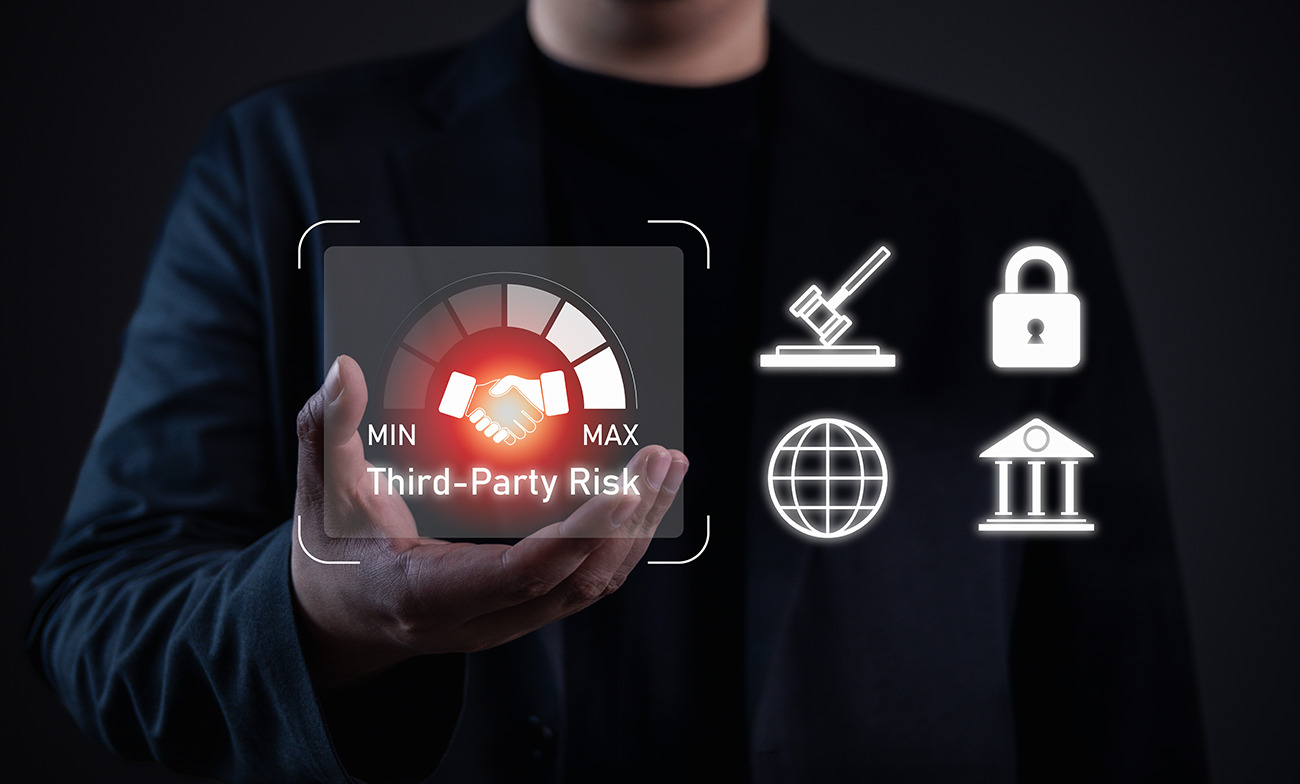

FINRA Panel Clears Baseless Advisory Fee Dispute For Florida Financial Advisor

RIA Partnership Disputes: The Critical Risk of CRD/IARD Super Account Administrator (SAA) Control

FINRA Panel Grants Triple Expungement For New York Financial Advisor
CE Credit Course: Outsourced CCO (OCCO) Services for RIAs
The New Standard Of Trust: Mastering Your Reputation In The AI-First Era
Executive Summary:
- Regulatory Responsibility: Under SEC Regulation S-P, RIAs are 100% responsible for client data protection, regardless of whether a breach occurs internally or at a third-party vendor (e.g., CRM, Cloud, Portfolio Reporting).
- The Compliance Gap: The most common audit finding is not the choice of vendor, but the lack of documented, ongoing due diligence and oversight.
- The 72-Hour Rule: The amended Regulation S-P (2025/2026) requires vendors to notify the firm within 72 hours of discovering a breach, and the firm must notify clients within 30 days.
- Mandatory VRM Framework: A defensible program must include Initial Due Diligence (SOC 2 reviews), Contractual Safeguards, Ongoing Monitoring, and a formal Annual Review under Rule 206(4)-7.
- AdvisorLaw Solution: We provide a turn-key, defensible VRM framework that automates oversight documentation so that third-party vendors remain a compliance asset rather than a liability.
In the digital era, registered investment advisers (RIAs) rely on a complex ecosystem of third-party vendors—from CRM software and portfolio reporting platforms, to cloud storage providers. These tools are essential, but they introduce significant compliance vulnerability.
The uncomfortable truth is this: in the eyes of the SEC, your firm is entirely responsible for client data protection, even if a security breach happens with a third-party vendor.
This core principle sits at the heart of Regulation S-P and is a central focus of ongoing priorities for the Division of Examinations. The risk isn’t just hypothetical—failure to demonstrate robust vendor oversight is one of the fastest ways for an RIA to attract serious regulatory scrutiny.
The Problem: Lack Of Documented Oversight
The SEC understands that modern technology requires third-party partners. The issue that examiners flag is not the choice of the vendor itself, but the lack of documented, ongoing oversight.
Simply trusting your vendor’s security claims is not enough. Examiners want concrete proof—an audit trail—that your firm has exercised reasonable due diligence over the systems housing your clients’ sensitive data and that you continuously monitor and document ongoing due diligence, at least annually.
The Four Pillars Of SEC Vendor Risk Management (VRM)
To satisfy regulatory demands, your vendor risk management (VRM) framework must clearly document four specific areas of oversight for every material vendor.
1. Initial Due Diligence (Before Signing)
Before a single dollar is spent or a single piece of client data is shared, you must assess the vendor’s internal security controls.
- Proof Required: Did you obtain and thoroughly review the vendor’s SOC 2 (Type II) report or equivalent security documentation? You must be able to demonstrate that you understood its control environment prior to contract execution.
2. Contractual Safeguards (The Agreement)
The contract is your first line of defense. It must align the vendor’s responsibilities with your regulatory obligations.
- Proof Required: Does your contract specifically mandate that the vendor must notify you within the required 72 hours of discovering a material incident or data breach? The clock starts ticking for your notification requirements the moment the vendor knows.
3. Ongoing Monitoring
The vendor’s control environment changes—it updates software, changes cloud providers, or moves data centers. Your oversight cannot be a one-time event.
- Proof Required: Do you have a process to regularly review the vendor’s control environment, track material changes, and ensure that its security posture has not weakened?
4. Annual Due Diligence (Rule 206(4)-7 Requirement)
As part of your mandatory annual compliance review, your third-party relationships must be reassessed.
- Proof Required: Your annual review documentation must confirm that your VRM policies were tested and that material vendor risks were evaluated and remediated over the past year.
AdvisorLaw: Implementing A Defensible VRM Framework
Manually managing vendor risk is burdensome and error-prone. We implement a complete, defensible vendor risk management (VRM) framework for RIAs. This allows you to demonstrate, with clear documentation, that your firm has reasonable policies designed to protect client data held by third parties.
Don’t wait for the next exam cycle to identify a critical gap in oversight. Let us help you audit and refine your processes so that your CRM and other critical software vendors are compliance assets, not liabilities.
Contact us today for a free consultation and learn how AdvisorLaw can help safeguard your practice.
Engage with our experts today!